Reversible vs non-reversible laytime: what a congested port costs you
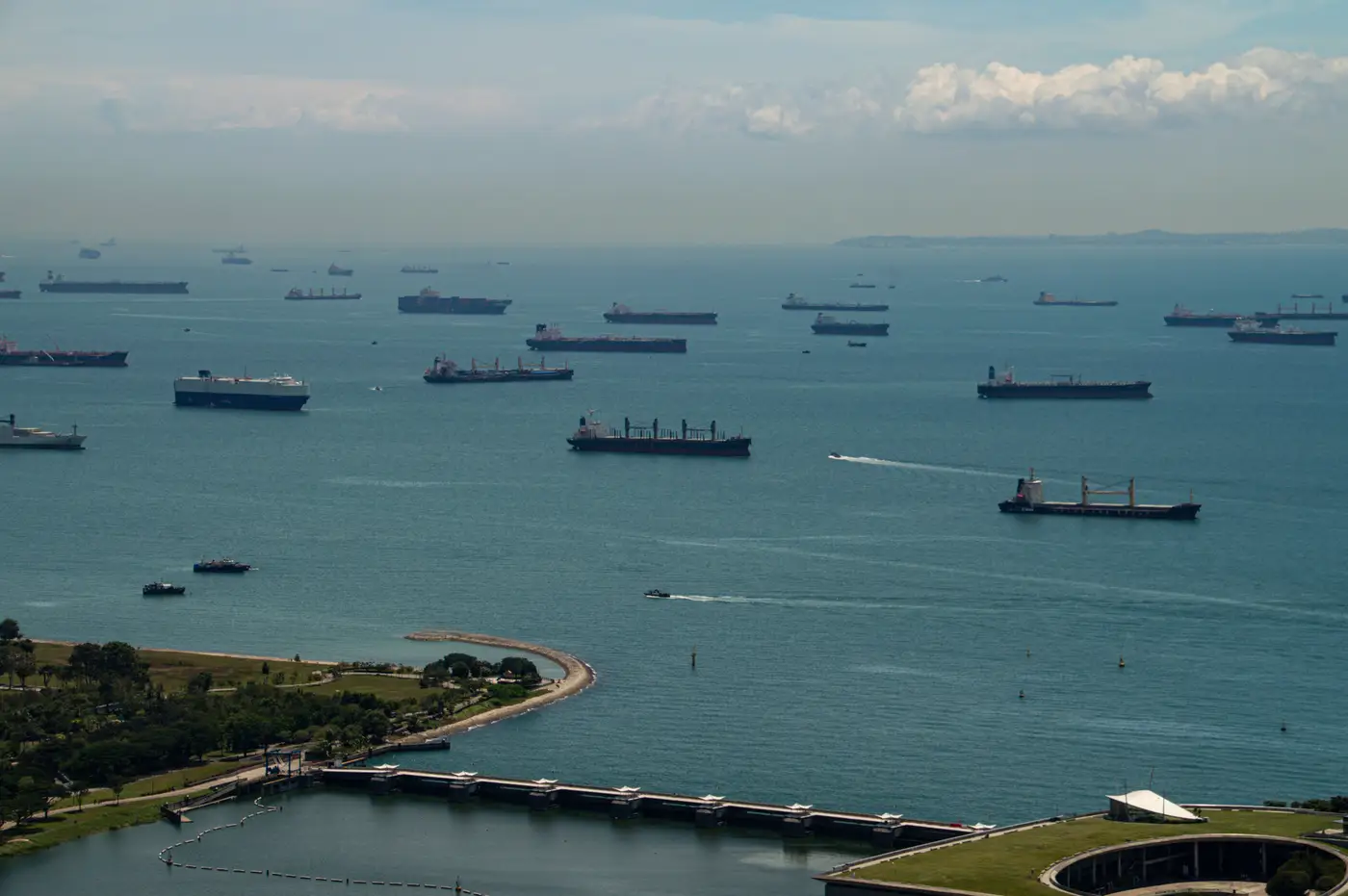
If you fix on reversible laytime across two load ports and the second port is stacked ten-deep at anchor, you eat every hour of that queue against the same laytime pool the first port already drew down. Fix non-reversible and the picture changes entirely: each port runs its own clock, and a clean first port can't bail out a congested second one. The clause you pick decides which side of the demurrage invoice absorbs a queue that nobody controls.
What each term does to the laytime pool
Reversible laytime treats all load and discharge ports named in the charter party as one combined allowance. Time used loading at Port A and time used discharging at Port B get added together, and demurrage or despatch is calculated once, at the end, against that combined total. For the charterer, this is useful when you've got a fast, well-run load port and a discharge port you're less sure about. Time saved at the first port effectively subsidizes delay at the second.
Non-reversible laytime (sometimes written as "laytime not reversible," or structured as separate laytime at each port) keeps the allowance for each port ring-fenced. If the vessel burns through her discharge laytime at a congested terminal, that overrun stands on its own. It doesn't matter if she loaded in six hours flat at the first port, that saved time has no bridge to the second port's clock.
The commercial logic owners push for non-reversible is straightforward: it caps their downside exposure per port and removes the charterer's ability to "bank" time from a fast port against a slow one. For a charterer or trader fixing a cargo that touches a port with a known anchorage queue, this is exactly the clause you want to catch before you sign, not after the Notice of Readiness has already tendered into a four-day wait.
Where this bites on the demurrage calculation
The real cost difference shows up at laytime-used calculation stage, not at the fixture stage, which is why it's easy to underprice. Take a two-port voyage: clean load at Port A, six hours under allowed laytime. Discharge at Port B, where the vessel sits at anchor two days before a berth opens, burning four days against an allowed three. Under a reversible clause, the saved hours at A offset part of the overrun at B. Under non-reversible, A's saved time is simply gone, unused, and B's overrun stands alone against the demurrage rate.
On a Capesize or Panamax fixture with demurrage running five figures a day, that distinction between reversible and non-reversible can be the difference between a few thousand dollars of exposure and a full extra day's rate, and you won't see it on the charter party itself. The charter party tells you which rule applies. It doesn't tell you how long the queue outside the discharge port actually runs, and that number is what turns the clause from theoretical to billable.
Reading the clause against the anchorage, not just the fixture note
This is the gap that costs money: a trader reads "laytime to count as one time for loading and discharging" in the recap, understands the mechanism, and still gets surprised by the demurrage claim because nobody was watching the anchorage at the discharge port while the vessel was en route. The clause sets the rule. The queue sets the bill.
Agents' Statements of Facts arrive after the fact, usually with NOR tendered and laytime already running by the time the telex lands on your desk. If you're carrying a fixture with non-reversible laytime into a port with a known queue, track the anchorage count in the weeks before and during the voyage. That's what shows the build-up forming and lets you size the demurrage exposure before the SOF confirms it. Port Congestion Watch tracks that daily vessel count at anchor for specific ports over time, which is the piece a charter party clause can't give you on its own.
If a discharge port on your next fixture has a congestion history worth watching, start pulling that daily count now instead of waiting on the agent.