Queuing clauses in a voyage charter party: what they actually decide
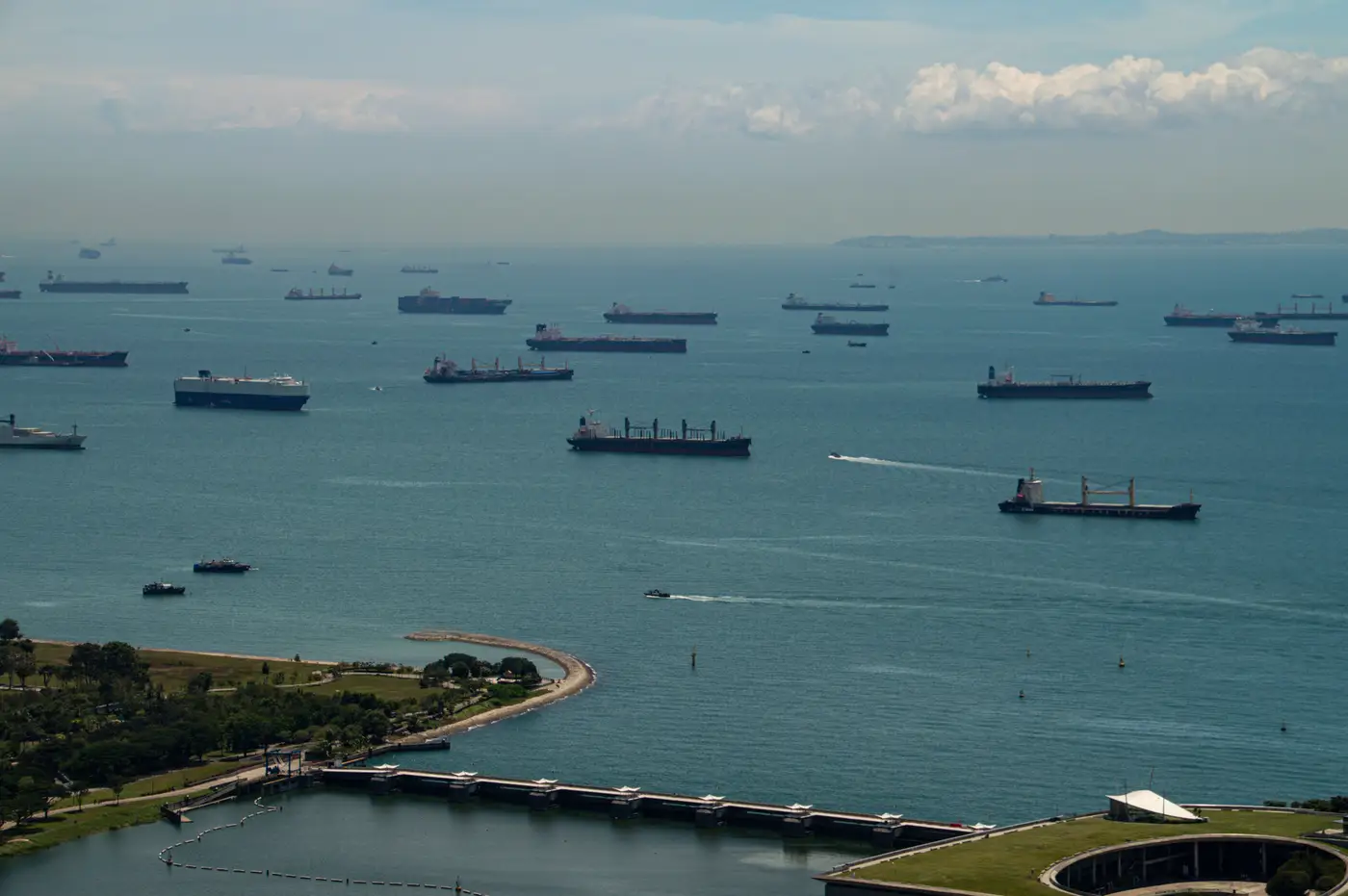
A queuing clause (sometimes called an anchorage queue clause, sometimes just folded into the laytime and demurrage wording) is the part of a voyage charter party that says what happens to laytime when a vessel has to wait her turn at anchor before berthing. Without it, owners and charterers end up arguing over a question that sounds simple and isn't: does the clock start when the vessel arrives off the port, or only once she's alongside and working cargo.
Most queuing clauses do one of two things. They either let Notice of Readiness be tendered from the anchorage regardless of berth availability (the WIBON / WIPON family, "whether in berth or not," "whether in port or not"), or they tie NOR to actual berthing and leave the owner exposed to the full queue before time starts running. The difference between those two positions, on a port running a two-week backlog, is the whole demurrage claim.
Why the wording matters more than the port
Charterers read queuing clauses backwards from the port they're fixing into. A clean, fast-turnaround terminal doesn't need much language here, because there's rarely a queue to argue about. The clause starts to matter the moment a port has a reputation for congestion, waiting lists, or a berthing rotation that gives priority to liner traffic over tramp bulk. At that point the queuing clause is doing real work. It's deciding, in advance, who eats the queue.
A typical WIBON formulation puts the risk on the charterer: laytime runs from a valid NOR at the anchorage whether or not a berth is open. A clause that conditions NOR on berthing, or that requires the vessel to be in free pratique and ready in all respects within the port limits, shifts queue risk back toward the owner, because nothing counts until she's inside and cleared. Some fixtures split the difference with a defined waiting time allowance or a separate anchorage demurrage rate, which is its own negotiation entirely.
None of this is boilerplate you can skim. A charterer fixing into a port that's been running a backlog for three weeks should be reading the queuing language with the same attention they'd give the laycan.
Time counting at anchor: what gets disputed
Even with a queuing clause on paper, the fights that reach arbitration are usually about facts, not wording. Was the vessel ready when NOR went in. Did weather or a port closure interrupt the queue in a way the clause excuses. Was there a valid reason the agent held NOR back a day. These are the disputes that turn on the telex trail, the pilot log, and whoever's version of the anchorage timeline survives cross-examination.
That's the gap a charterer feels first. The clause tells you how time should count. It doesn't tell you, in real time, how many ships are sitting out there ahead of yours, or whether the queue got longer or shorter since your agent's last update. Agents report what they're told to report, and a telex update sent on a Tuesday can be describing a queue that looked different by Thursday.
Congestion risk allocation isn't just a clause
Risk allocation in the fixture is a legal question. Whether that risk turns into an actual demurrage bill is an operational one, and it depends on how long the vessel sits in the queue. A charterer carrying queue risk under a WIBON clause wants to know the anchorage count is building before the voyage order gets written, not after the laytime statement arrives. A charterer who's pushed that risk onto owners still wants to know it, because a long queue changes what the next fixture into that port should look like.
Port Congestion Watch tracks a daily vessel count at anchor outside specific ports, built up over time into a congestion series, so a charterer can see the queue building or clearing before the agent's telex catches up. It doesn't read your charter party for you. It gives you the one number that tells you whether the clause you negotiated is about to cost you money.
If you're negotiating queuing language into a fixture, or watching one that's already signed, it helps to have the anchorage count in front of you before the voyage order goes out.